The open circuit voltage of the device is 20 V, the short-circuit current is 20 μ A, and the conduction time is 80 μ s. It is packaged in SMD-4 and the molding material CTI reaches 600. The creepage distance is 8 mm
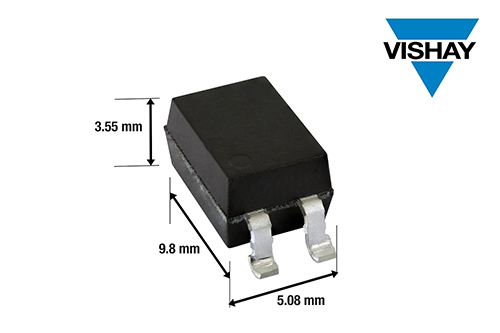
MALVERN, Pennsylvania, USA, Shanghai, China - April 1, 2026- Vishay Intertechnology, Inc. (NYSE stock code: VSH) announced the launch of VODA1275, a new vehicle grade photovoltaic MOSFET driver that uses a compact SMD-4 package for the first time. The creepage distance is 8 mm and the relative leakage trace index (CTI) of the molding material is 600. Vishay Semiconductors VODA1275 is specifically designed to enhance the safety and reliability of high-voltage vehicle applications, while simplifying design and reducing costs. The device's on-time, open circuit voltage, and short-circuit current have all reached advanced levels in the industry.
The recently released enhanced isolation device has a typical open circuit voltage of 20 V, a short-circuit current of 20 μ A, and a conduction time of 80 μ s, which is three times faster than competing devices. These features help drive high-voltage system MOSFETs and IGBTs faster and more reliably. In addition, the working isolation voltage and isolation test voltage of the device reach 1260 Vpeak and 5300 VRMS respectively, making it an ideal choice for 800 V+battery systems.
VODA1275 has passed AEC-Q102 certification and is suitable for pre charging circuits, wall mounted chargers, as well as electric (EV) and hybrid electric (HEV) vehicle battery management systems (BMS). In the past, in order to generate the high voltage required for these applications, designers needed to connect two MOSFET drivers in series, utilizing the high open circuit output voltage of the devices. Only one driver was needed to meet this requirement, thereby saving space and reducing costs. In addition, the development of the next generation of cars using this new type of driver can replace traditional electromechanical relays with customized solid-state relays.
All the current required for the internal circuit of the optically isolated VODA1275 driver is taken from the low voltage side infrared emitter of the isolation gate. This structure does not require an external power source, thus simplifying the design and reducing costs. MOSFET drivers comply with RoHS and Vishay green standards, and are halogen-free.
VODA1275 can now provide samples and has achieved mass production, with a supply cycle of 8 weeks.